
 downlodhub.co.uk@gmail.com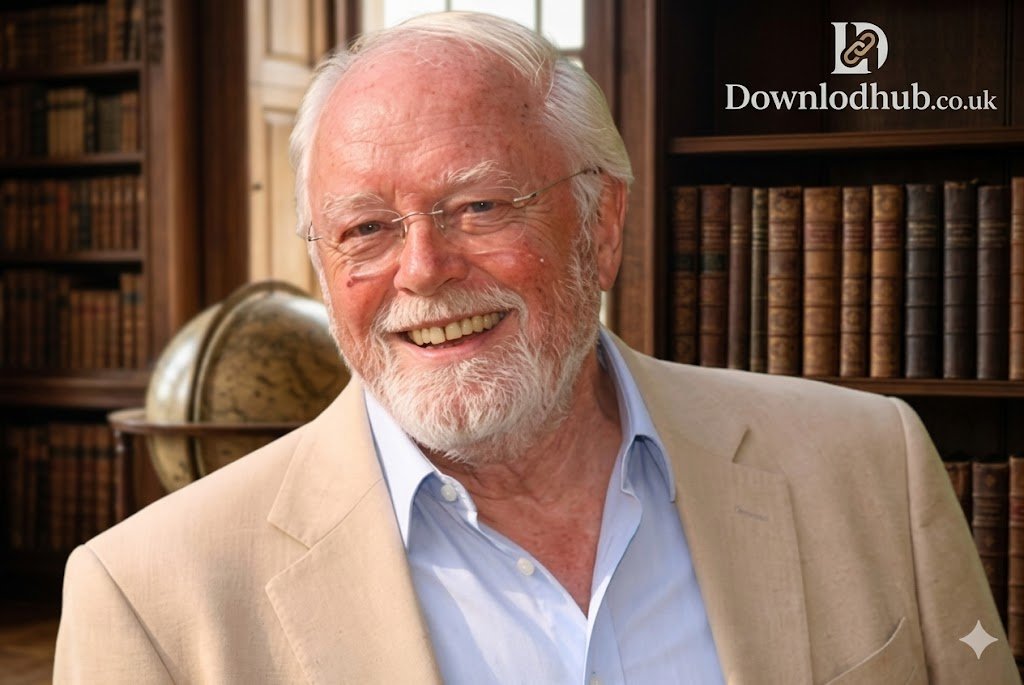
Introduction
Robert Attenborough is a British scholar and biological anthropologist, known primarily for his academic contributions to human evolutionary biology, population studies, and anthropology. He comes from the prominent Attenborough family—his father, Sir David Attenborough, is a world-renowned natural historian and broadcaster—but Robert has chosen a quieter path, building his legacy in scientific research rather than public media. His work focuses on understanding human variation, adaptation, and the interplay between biology, culture, and environment.
Robert Attenborough Early Life and Family
Robert Attenborough was born in the United Kingdom to Sir David Attenborough and Jane Elizabeth Ebsworth Oriel. Growing up in a family deeply engaged with science, education, and natural history, he was exposed to intellectual curiosity from a young age. While his father became internationally famous for his nature documentaries, Robert was drawn to academia and the study of human biology, carving his own path within scholarly circles.
He grew up alongside his siblings in a household that valued education, scientific observation, and critical thinking, laying the foundation for his later career in anthropology.
Robert Attenborough Education and Academic Career
Robert Attenborough pursued higher education in fields related to biological anthropology and human biology. Though details of his undergraduate and postgraduate education are not publicly detailed, his career trajectory reflects advanced training in anthropology, human evolution, and population studies.
He served as a senior lecturer in biological anthropology at the Australian National University (ANU), where he taught courses on human variation, evolutionary biology, and population health. He conducted field research in regions such as Papua New Guinea, studying human adaptation and growth in diverse ecological and cultural contexts.
Currently, Robert Attenborough holds the position of Senior Fellow at the McDonald Institute for Archaeological Research, University of Cambridge. Here, he continues research and mentorship in human evolutionary studies and population biology, bridging academic insights with interdisciplinary collaboration.
Robert Attenborough Research Focus
Robert Attenborough’s scholarly work spans several key areas:
Human Population Biology
He investigates how human populations adapt biologically to environmental pressures, diet, and demographic changes. His research emphasizes the effects of nutrition, health, and growth patterns on different communities, often focusing on populations in Oceania.
Evolutionary Anthropology
His studies explore how evolutionary processes interact with cultural and ecological factors, shaping human behavior and biology over time. He uses comparative methods to analyze how human populations respond to changing environments.
Regional Focus: Oceania and Pacific
A significant portion of his fieldwork examines human populations in Papua New Guinea and nearby regions. These studies provide insight into how traditional lifestyles, environmental conditions, and modernization influence human health, growth, and adaptation.
Health and Nutrition
Robert also studies the connections between diet, nutrition, and health outcomes, particularly in populations experiencing transitions from traditional to modern ways of living. His work informs broader discussions on global health and evolutionary adaptations.
Robert Attenborough Academic Publications
Robert Attenborough has contributed to scholarly articles, book chapters, and reviews, primarily within the fields of anthropology, human biology, and population studies. His research often combines empirical data with theoretical insights, reflecting his interdisciplinary approach. Notable contributions include studies on growth and development, evolutionary ecology, and the health impacts of cultural and environmental change.
While his publications are mainly within academic journals and research compilations, they have influenced students, researchers, and peers working in biological anthropology and human evolutionary studies.
Robert Attenborough Personal Life and Public Profile
Unlike his father, Robert Attenborough maintains a low public profile. He prioritizes academic research and teaching over media attention. This decision allows him to focus deeply on scientific inquiry and mentoring students, contributing quietly but significantly to his field.
He is known for his commitment to rigorous research, cross-cultural fieldwork, and interdisciplinary scholarship. His impact is felt most strongly in academic and research communities rather than the public sphere.
Robert Attenborough Legacy and Influence
Robert Attenborough’s legacy lies in his dedication to understanding human biology and evolution in cultural and environmental contexts. Through decades of research and teaching, he has influenced numerous students, contributed to the advancement of anthropological knowledge, and promoted a scientific understanding of human diversity.
His work demonstrates that impactful contributions do not always require public recognition; scholarly rigor, thoughtful research, and mentorship can leave a lasting mark on science and education.
Conclusion
Robert Attenborough exemplifies a life devoted to science and learning. While his family name is widely recognized, he has chosen a path of quiet scholarship, focusing on biological anthropology, human adaptation, and evolutionary studies. His research provides valuable insights into human diversity, population biology, and health, and his influence continues to shape the field of anthropology for students and researchers alike.
In combining field research, teaching, and interdisciplinary scholarship, Robert Attenborough demonstrates the enduring importance of rigorous academic work, proving that intellectual curiosity and dedication are as vital to legacy as fame.